• Skip to main content
  • Skip to primary sidebar
theanswerisyes-logo

Call Us Now On

07 3180 4422

  • Home
  • Contact Us
  • Thinking
  • The Capability Pathways
    • Workforce Gateway
      • Leadership Capability
        • Emerging and Frontline Leaders
        • Communication and Influence
        • Team Leadership and Engagement Programs
        • Conflict and Difficult Conversations
        • Performance Conversations
      • People and Culture Capability
        • Workforce Foundations and HR Systems
        • Recruitment and Talent Management
        • Workplace Culture and Ethics
        • Performance and Reward Systems
      • Safety and Wellbeing Capability
        • WHS Foundations and Legal Duties
        • Psychosocial Risk and Mental Health
        • Emergency Preparedness and Response
        • Physical Risk, Chemicals and Manual Handling
        • Menopause and Life Stage Support
      • Organisational Capability
        • Governance and Structural Foundations
        • Project and Change Capability
        • Operational Systems and Process Excellence
      • Digital and Cyber Capability
        • Cyber Awareness and Human Firewall
        • Cyber Governance and Risk
        • Incident Response and Organisational Readiness
        • Secure Infrastructure and Environments
      • Career and Employability Capability
        • Career Foundations and Direction Capability
        • Job Readiness and Employability Skills Capability
        • Career Growth and Advancement
        • Career Transition and Reinvention
        • Coaching and Career Practice Capability
      • Business and Commercial Capability
        • Business Foundations and Entrepreneurship
        • Marketing, Branding and Visibility
        • Sales, Marketing and Visibility
        • Financial Intelligence and Commercial Performance
        • Strategy, Growth and Scale
      • Government Workforce Capability
    • Human Development Gateway
      • Inner Development Capability
        • Self-Leadership and Personal Mastery
        • Emotional Intelligence and Inner Resilience
        • Purpose, Meaning and Life Direction
        • Reflective Practice and Conscious Decision-Making
      • Educator Development Capability
        • Instructional Design and Digital Delivery
        • Facilitation and Professional Practice
        • Professional Communication and Relational Leadership
      • Student Development Capability
        • Learning Skills and Academic Capability
        • Student Emotional Intelligence and Self-Regulation
      • Family Development Capability
        • Parenting for Learning and Development
        • Family Safety and Digital Protection
        • Healthy Family and Personal Relationships
    • First Nations Capability Gateway
      • Cultural Authority and Governance
      • Learning Through Country
      • Indigenous Ways of Teaching and Learning
      • Identity, Connection and Community
      • First Nations Leadership and Economic Participation
  • Partner With Us
  • Insights
    • The Capability Journal
    • The Answer is Yes Magazine (coming soon)
  • Social Impact
  • About
    • Our Capability Experts
    • Testimonials

Corrina Lindby

The Moment Mentors Are Tested Most

Patience and empathy from mentors create learning environments where people feel safe to develop new skills.
👉 Explore Human Development Capability

The Moment Mentors Are Tested Most

As a mentor or teacher, it can be frustrating to watch someone struggle to understand a new concept or skill.

Learning rarely happens at the same pace for everyone. Some people grasp ideas quickly, while others need time to process information, experiment, and make sense of unfamiliar material. When someone is learning something new, confusion and hesitation are often part of the process rather than signs of failure.

The way a mentor responds during those moments matters more than many people realise. Impatience, sarcasm, or criticism can quickly damage confidence. Once confidence drops, motivation often follows, and the learner may become reluctant to ask questions or attempt the task again.

A different response creates a very different outcome. When mentors demonstrate patience and empathy, learners feel supported rather than judged. They become more willing to try again, ask questions, and accept guidance. That sense of psychological safety is often what allows learning to progress.

Effective mentors understand that teaching is not only about transferring knowledge. It is also about creating an environment where people feel comfortable developing capability. Encouragement, constructive feedback, and respectful communication all contribute to that environment.

Across The Answer Is Yes platform, many programs explore the capabilities required for effective mentoring, facilitation, and professional teaching practice. When educators and mentors strengthen these skills, they help learners move beyond frustration and begin building confidence in their own ability to grow.

Learning is rarely a straight path. However, with patience and thoughtful guidance, mentors can turn moments of struggle into moments of progress.
👉 Explore Human Development Capability

Category: Educator Development, Human Development

Ten Minutes That Can Change a Team

Ten to fifteen minutes of learning in meetings can strengthen team capability, engagement, and shared knowledge.

Ten Minutes That Can Change a Team

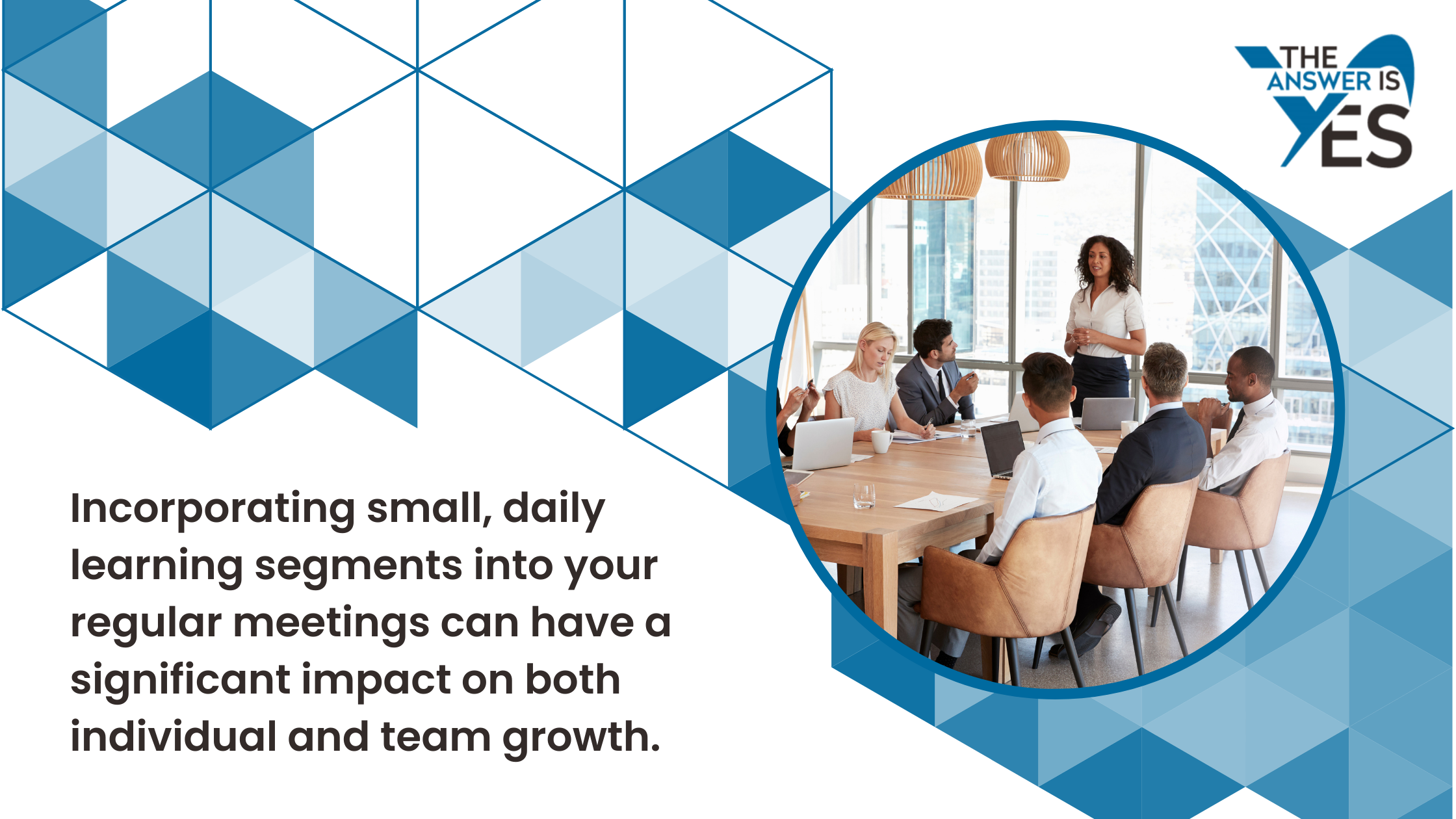
Incorporating small learning segments into regular team meetings can have a significant impact on both individual and team growth.

Many meetings focus almost entirely on updates, deadlines, and operational issues. Those discussions are necessary; however, they rarely strengthen the capability of the team. Over time, teams that only discuss tasks often miss opportunities to develop thinking, knowledge, and collaboration.

👉 Explore Team Leadership and Engagement Capability

Setting aside just ten to fifteen minutes for learning can change that dynamic. A short discussion about a useful concept, an insight from experience, or a practical skill can introduce new perspectives and stimulate better conversations within the team.

Rotating the responsibility among team members also strengthens engagement. When different people lead the learning segment, the team benefits from a wider range of experiences and ideas. Participation increases because individuals feel they are contributing rather than simply listening.

Consistency is more important than duration. A short learning conversation each week gradually builds a culture of curiosity and shared growth. Over time, these discussions strengthen communication, broaden understanding, and encourage continuous improvement.

Leaders who integrate learning into everyday routines often notice stronger team cohesion and greater confidence in problem solving. Instead of treating development as something separate from work, capability becomes part of how the team operates.

Across The Answer Is Yes platform, many courses support these small but powerful learning habits. Programs such as Habits of an Optimist provide practical ideas that can easily be explored during short team discussions.

Ten to fifteen minutes may seem small. However, repeated consistently, those moments can quietly reshape the mindset and capability of an entire team.

👉 Explore Team Leadership and Engagement Capability

Category: Leadership Capability

The Potential People Often Cannot See in Themselves

Many people underestimate their potential until someone challenges the way they see themselves and what they believe is possible.
👉 Explore Human Development Capability

The Potential People Often Cannot See in Themselves

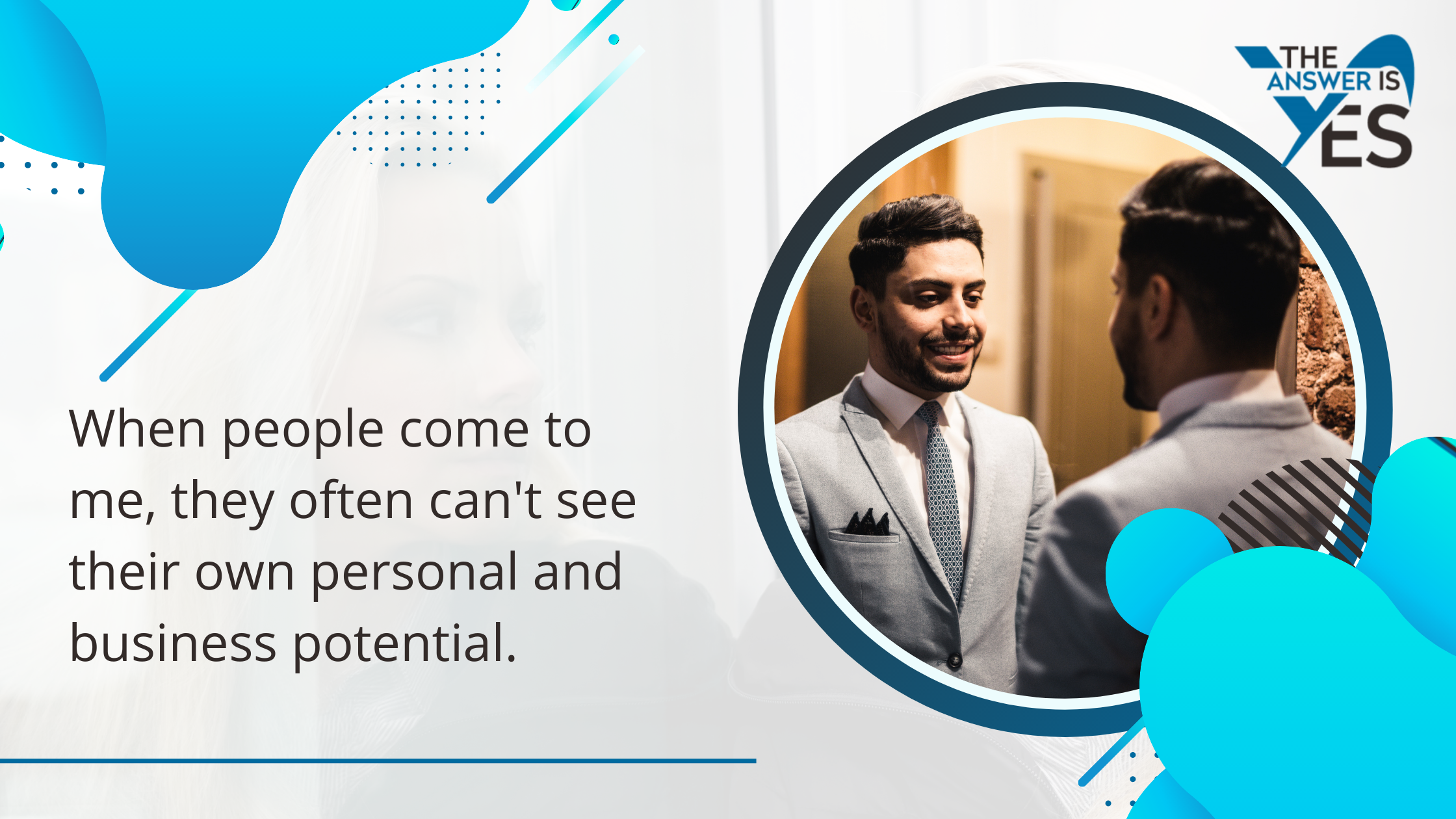
When people come to me, they often cannot see their own personal and business potential.

Many individuals arrive carrying a story about themselves that has been shaped by past experiences, disappointments, or circumstances that did not go the way they hoped. Over time that story becomes a quiet limitation. It influences how they see their abilities, the opportunities they pursue, and the goals they believe are realistic.

Coaching and mentoring often begin by challenging that internal narrative. When someone begins to question the limits they have placed on themselves, new possibilities start to appear. Growth rarely happens because someone suddenly becomes more talented. Instead, it happens when they adopt a learning mindset and begin to see capability as something that can be developed.

A learning disposition changes the way people approach challenges. Rather than interpreting setbacks as proof of failure, they start viewing them as signals for improvement. Skills can be strengthened, thinking can evolve, and confidence often grows through experience rather than through certainty.

Vision also plays an important role. People who grow professionally and personally tend to imagine what they could become, not simply what they are today. That vision creates direction. It encourages effort, persistence, and the willingness to develop new capabilities over time.

This is where mentoring and coaching become valuable. A good mentor does not simply give advice. Instead, they help individuals recognise strengths they may have overlooked, challenge assumptions that hold them back, and support the development of capabilities that allow people to move forward with greater confidence.

Across The Answer Is Yes platform, many of our courses focus on this idea of self-leadership. When individuals strengthen their awareness, mindset, and capability, they begin to realise that growth is not limited by their past. It is shaped by the choices they make about how they learn, develop, and lead themselves.

👉 Explore Human Development Capability

Category: Human Development

𝐓𝐡𝐞 𝐒𝐤𝐢𝐥𝐥 𝐌𝐨𝐬𝐭 𝐏𝐫𝐨𝐟𝐞𝐬𝐬𝐢𝐨𝐧𝐚𝐥𝐬 𝐑𝐞𝐬𝐢𝐬𝐭: 𝐔𝐧𝐥𝐞𝐚𝐫𝐧𝐢𝐧𝐠

Why professionals must sometimes unlearn old habits before developing the capabilities needed to stay relevant in modern business.

The Skill Most Professionals Resist: Unlearning

Most professionals spend years building knowledge, methods, and systems that once delivered excellent results. Over time, however, those same approaches can quietly lose their effectiveness. Markets evolve, customer expectations shift, and practices that once worked well begin producing weaker outcomes.

The difficulty is that people rarely notice the moment when a successful approach becomes outdated. Instead, they continue applying the same strategies because those methods feel familiar and safe. Yet familiarity is not always the same as effectiveness.

Sales provides a clear example. Traditional sales methods often relied on persuasion, scripts, and pressure-based conversations designed to move customers quickly toward a decision. While those approaches were once common, modern buyers respond very differently. Customers now recognise scripted conversations immediately, and when that happens, trust declines and engagement disappears.

As a result, organisations that continue relying on outdated techniques gradually lose their competitive advantage. By contrast, businesses that question their assumptions begin strengthening their capability. They rethink how conversations happen, they develop stronger listening skills, and they focus on building trust rather than pushing transactions.

This is where the concept of unlearning becomes important. Professional growth is not only about gaining new knowledge. In many cases, it also requires recognising when existing habits, beliefs, or strategies no longer serve the organisation or the customer.

When individuals develop the ability to question their own methods, they create space for better thinking and more effective practice. That mindset keeps professionals adaptable and ensures their skills remain relevant as industries evolve.

Across The Answer Is Yes capability platform, many expert-led courses focus on helping professionals rethink how they communicate, lead, sell, and collaborate. Rather than simply adding more information, capability development encourages people to examine how their existing practices influence results.

Progress sometimes begins with learning something new. Just as often, however, it begins by recognising what needs to be left behind.

👉 Explore Business and Commercial Capability

Category: Business and Commercial Capability

Why Technical Expertise Does Not Automatically Create Great Leaders

Technical expertise does not automatically create leadership success. Discover why people skills determine real leadership effectiveness.
Explore the Leadership Capability

Why Technical Expertise Does Not Automatically Create Great Leaders

Technical expertise builds credibility. However, leadership requires something more.

Across many industries, the most skilled employee is often promoted into management. At first glance, this approach appears logical. After all, the individual understands the work better than anyone else.

Yet technical expertise does not automatically translate into leadership capability. In reality, the transition from expert to leader demands an entirely different set of skills.

The shift from doing work to leading people

When someone performs technical work, success depends primarily on personal effort. Leaders, however, succeed through the performance of others. This shift changes the nature of responsibility.

A leader must now guide behaviour, resolve conflict, and motivate individuals with different personalities and expectations. Consequently, people management becomes just as important as operational knowledge. Without these skills, even the most talented experts can struggle in leadership roles.

Leadership capability requires different strengths

Effective leadership focuses on developing people rather than demonstrating expertise. Therefore, leaders must strengthen capabilities such as:

— Communication
— Emotional intelligence
— Delegation
— Coaching
— Conflict resolution

These skills allow leaders to build capable teams instead of carrying the workload alone.

Why technical leaders sometimes struggle

Several patterns commonly appear when technical experts move into leadership.

— They solve problems themselves instead of developing their team
— They hesitate to delegate important tasks
— They become frustrated when others work differently
— They avoid difficult conversations

These behaviours usually come from habit rather than poor intent. Nevertheless, they create long-term problems. Teams become overly dependent on the leader, while the leader becomes overwhelmed with responsibility. Eventually, productivity slows and morale begins to decline.

The leadership mindset shift

Successful leaders understand one critical principle. Their value no longer lies in doing the work personally. Instead, their value lies in helping others perform well.

This mindset change allows teams to grow stronger, more confident, and more independent. Over time, the organisation benefits from greater productivity and improved collaboration.

Technical expertise still matters. However, leadership success ultimately depends on the ability to guide people, not simply complete tasks.

Explore the Leadership Capability

Category: Leadership Capability

Why Most Leadership Problems Start with Unclear Expectations

Most leadership problems begin with unclear expectations. Learn how clear standards transform team performance.
👉 Explore the Leadership Capability

Why Most Leadership Problems Start with Unclear Expectations

Many workplace problems do not begin with poor performance. Instead, they begin with unclear expectations.

Managers often assume employees understand what success looks like. However, assumptions create confusion, and confusion almost always leads to frustration. Eventually, that frustration appears as missed deadlines, inconsistent work quality, or disengaged staff. Strong leadership removes that uncertainty.

Clear expectations help people perform with confidence because they understand both the goal and the standard required to achieve it. When expectations are vague, employees start guessing. Once guessing replaces clarity, performance becomes unpredictable.

Why unclear expectations damage performance

When expectations are unclear, several predictable problems emerge.

— Staff interpret instructions differently
— Work must be redone because the standard was misunderstood
— Leaders become frustrated with results they never clearly defined
— Employees lose confidence in their ability to succeed

As a result, productivity drops while tension rises.

In contrast, clear expectations create stability. People work faster because they know what good performance looks like. Teams also collaborate more effectively because everyone understands the shared objective.

How leaders create clarity in everyday work

Leadership clarity does not require complex systems. Instead, it requires consistent communication.

For example, leaders should:

— Explain the desired outcome before assigning work
— Provide examples of what good performance looks like
— Address confusion immediately
— Reinforce expectations regularly

These small actions create significant improvements.

Over time, teams begin operating with greater independence because expectations remain stable and predictable.

What effective leaders communicate clearly

Effective leaders communicate three things early.

— The outcome required
— The quality standard expected
— The timeframe for delivery

Clarity in these three areas removes most operational confusion.

Furthermore, strong leaders confirm understanding rather than assuming it. They ask questions, encourage feedback, and ensure everyone interprets the goal the same way. This step prevents misunderstandings before they become problems.

The leadership advantage

Clear expectations strengthen accountability without creating conflict.

Employees understand their responsibilities, while leaders gain the ability to evaluate performance fairly. Consequently, feedback conversations become easier because the standards were established from the beginning.

Great leadership rarely depends on charisma alone.

Instead, it depends on clarity.

When leaders communicate expectations properly, performance improves, frustration decreases, and teams gain confidence in their work.

👉 Explore the Leadership Capability

Category: Leadership Capability

  • « Go to Previous Page
  • Page 1
  • Page 2
  • Page 3
  • Page 4
  • Go to Next Page »

Primary Sidebar

Book With Us

Book a Strategy Session Today to discuss your Training Needs

  • This field is for validation purposes and should be left unchanged.

Call Us Now On+61 423 596 393

Training Services

  • Home
  • Contact Us
  • Thinking
  • The Capability Pathways
    • Workforce Gateway
      • Leadership Capability
        • Emerging and Frontline Leaders
        • Communication and Influence
        • Team Leadership and Engagement Programs
        • Conflict and Difficult Conversations
        • Performance Conversations
      • People and Culture Capability
        • Workforce Foundations and HR Systems
        • Recruitment and Talent Management
        • Workplace Culture and Ethics
        • Performance and Reward Systems
      • Safety and Wellbeing Capability
        • WHS Foundations and Legal Duties
        • Psychosocial Risk and Mental Health
        • Emergency Preparedness and Response
        • Physical Risk, Chemicals and Manual Handling
        • Menopause and Life Stage Support
      • Organisational Capability
        • Governance and Structural Foundations
        • Project and Change Capability
        • Operational Systems and Process Excellence
      • Digital and Cyber Capability
        • Cyber Awareness and Human Firewall
        • Cyber Governance and Risk
        • Incident Response and Organisational Readiness
        • Secure Infrastructure and Environments
      • Career and Employability Capability
        • Career Foundations and Direction Capability
        • Job Readiness and Employability Skills Capability
        • Career Growth and Advancement
        • Career Transition and Reinvention
        • Coaching and Career Practice Capability
      • Business and Commercial Capability
        • Business Foundations and Entrepreneurship
        • Marketing, Branding and Visibility
        • Sales, Marketing and Visibility
        • Financial Intelligence and Commercial Performance
        • Strategy, Growth and Scale
      • Government Workforce Capability
    • Human Development Gateway
      • Inner Development Capability
        • Self-Leadership and Personal Mastery
        • Emotional Intelligence and Inner Resilience
        • Purpose, Meaning and Life Direction
        • Reflective Practice and Conscious Decision-Making
      • Educator Development Capability
        • Instructional Design and Digital Delivery
        • Facilitation and Professional Practice
        • Professional Communication and Relational Leadership
      • Student Development Capability
        • Learning Skills and Academic Capability
        • Student Emotional Intelligence and Self-Regulation
      • Family Development Capability
        • Parenting for Learning and Development
        • Family Safety and Digital Protection
        • Healthy Family and Personal Relationships
    • First Nations Capability Gateway
      • Cultural Authority and Governance
      • Learning Through Country
      • Indigenous Ways of Teaching and Learning
      • Identity, Connection and Community
      • First Nations Leadership and Economic Participation
  • Partner With Us
  • Insights
    • The Capability Journal
    • The Answer is Yes Magazine (coming soon)
  • Social Impact
  • About
    • Our Capability Experts
    • Testimonials

What Our Client Says

Corrina was able to handle anything I threw at her

When I was opening my company I was a little lost in what I needed for compliancy and support. Corrina was able to handle anything I threw at her, from Health and Safety requirements, through to Fire training, and staffing issues. What Corrina brings to the table is a wealth of knowledge and access to… Read more “Corrina was able to handle anything I threw at her”

Von Barnes
Principal of Pinnacle Properties

Corrina made it very clear and easy to understand

I work at a desk all day and I didn’t fully understand or realise the multitude of risks/hazards not only in my workplace but in other industries and sites. Corrina made it very clear and easy to understand

Telia Dwyer,
Design Governess

A very good way to spend an afternoon

Doing Hazard & Risk Assessment Training was A very good way to spend an afternoon -it will start me on a journey I have been planing for a year but failed to start

Mark Bell
Desks Etc

Very well explained

The Hazard & Risk Assessment was very well explained, simple… so that every one understands

Maraia Cookson
In House Printing

Recent Posts

  • The Hidden Cost of Owner Dependency
  • Why Staff Problems Are Usually a System Problem
  • Revenue Growth Doesn’t Fix Profit Problems
  • Customer Service Problems Are Rarely About Attitude
  • Workplace Mental Health Is Shaped by How Work Is Designed

Book a Strategy Session Today to discuss your Training Needs

Book now

menu

  • Home
  • Contact Us
  • Thinking
  • The Capability Pathways
    • Workforce Gateway
      • Leadership Capability
        • Emerging and Frontline Leaders
        • Communication and Influence
        • Team Leadership and Engagement Programs
        • Conflict and Difficult Conversations
        • Performance Conversations
      • People and Culture Capability
        • Workforce Foundations and HR Systems
        • Recruitment and Talent Management
        • Workplace Culture and Ethics
        • Performance and Reward Systems
      • Safety and Wellbeing Capability
        • WHS Foundations and Legal Duties
        • Psychosocial Risk and Mental Health
        • Emergency Preparedness and Response
        • Physical Risk, Chemicals and Manual Handling
        • Menopause and Life Stage Support
      • Organisational Capability
        • Governance and Structural Foundations
        • Project and Change Capability
        • Operational Systems and Process Excellence
      • Digital and Cyber Capability
        • Cyber Awareness and Human Firewall
        • Cyber Governance and Risk
        • Incident Response and Organisational Readiness
        • Secure Infrastructure and Environments
      • Career and Employability Capability
        • Career Foundations and Direction Capability
        • Job Readiness and Employability Skills Capability
        • Career Growth and Advancement
        • Career Transition and Reinvention
        • Coaching and Career Practice Capability
      • Business and Commercial Capability
        • Business Foundations and Entrepreneurship
        • Marketing, Branding and Visibility
        • Sales, Marketing and Visibility
        • Financial Intelligence and Commercial Performance
        • Strategy, Growth and Scale
      • Government Workforce Capability
    • Human Development Gateway
      • Inner Development Capability
        • Self-Leadership and Personal Mastery
        • Emotional Intelligence and Inner Resilience
        • Purpose, Meaning and Life Direction
        • Reflective Practice and Conscious Decision-Making
      • Educator Development Capability
        • Instructional Design and Digital Delivery
        • Facilitation and Professional Practice
        • Professional Communication and Relational Leadership
      • Student Development Capability
        • Learning Skills and Academic Capability
        • Student Emotional Intelligence and Self-Regulation
      • Family Development Capability
        • Parenting for Learning and Development
        • Family Safety and Digital Protection
        • Healthy Family and Personal Relationships
    • First Nations Capability Gateway
      • Cultural Authority and Governance
      • Learning Through Country
      • Indigenous Ways of Teaching and Learning
      • Identity, Connection and Community
      • First Nations Leadership and Economic Participation
  • Partner With Us
  • Insights
    • The Capability Journal
    • The Answer is Yes Magazine (coming soon)
  • Social Impact
  • About
    • Our Capability Experts
    • Testimonials

Contact Information

Queensland, Australia

info@answeryes.com.au

07 3180 4422

Policies

  • Accessibility Statement

  • Australian Privacy Policy

  • Refund and Returns Policy

  • Website and Service Terms

Connect With us

facebook twitter instagram tiktok
  • Home
  • Contact Us
  • Thinking
  • The Capability Pathways
    • Workforce Gateway
      • Leadership Capability
        • Emerging and Frontline Leaders
        • Communication and Influence
        • Team Leadership and Engagement Programs
        • Conflict and Difficult Conversations
        • Performance Conversations
      • People and Culture Capability
        • Workforce Foundations and HR Systems
        • Recruitment and Talent Management
        • Workplace Culture and Ethics
        • Performance and Reward Systems
      • Safety and Wellbeing Capability
        • WHS Foundations and Legal Duties
        • Psychosocial Risk and Mental Health
        • Emergency Preparedness and Response
        • Physical Risk, Chemicals and Manual Handling
        • Menopause and Life Stage Support
      • Organisational Capability
        • Governance and Structural Foundations
        • Project and Change Capability
        • Operational Systems and Process Excellence
      • Digital and Cyber Capability
        • Cyber Awareness and Human Firewall
        • Cyber Governance and Risk
        • Incident Response and Organisational Readiness
        • Secure Infrastructure and Environments
      • Career and Employability Capability
        • Career Foundations and Direction Capability
        • Job Readiness and Employability Skills Capability
        • Career Growth and Advancement
        • Career Transition and Reinvention
        • Coaching and Career Practice Capability
      • Business and Commercial Capability
        • Business Foundations and Entrepreneurship
        • Marketing, Branding and Visibility
        • Sales, Marketing and Visibility
        • Financial Intelligence and Commercial Performance
        • Strategy, Growth and Scale
      • Government Workforce Capability
    • Human Development Gateway
      • Inner Development Capability
        • Self-Leadership and Personal Mastery
        • Emotional Intelligence and Inner Resilience
        • Purpose, Meaning and Life Direction
        • Reflective Practice and Conscious Decision-Making
      • Educator Development Capability
        • Instructional Design and Digital Delivery
        • Facilitation and Professional Practice
        • Professional Communication and Relational Leadership
      • Student Development Capability
        • Learning Skills and Academic Capability
        • Student Emotional Intelligence and Self-Regulation
      • Family Development Capability
        • Parenting for Learning and Development
        • Family Safety and Digital Protection
        • Healthy Family and Personal Relationships
    • First Nations Capability Gateway
      • Cultural Authority and Governance
      • Learning Through Country
      • Indigenous Ways of Teaching and Learning
      • Identity, Connection and Community
      • First Nations Leadership and Economic Participation
  • Partner With Us
  • Insights
    • The Capability Journal
    • The Answer is Yes Magazine (coming soon)
  • Social Impact
  • About
    • Our Capability Experts
    • Testimonials

© 2020 - 2026 The Answer Is Yes.

×

HAZARDOUS CHEMICALS
SELF-ASSESSMENT CHECKLIST

5_0_5_0_5_0_5_0_5_0_5_0_5_0_5_0_5_0_5_0_5_0_5_0_5_0_5_0_5_0_5_0_5_0_5_0_5_0_5_0_5_0

Total

0/100

0 - 25 - You have serious problem on your site and need to act immediately to rectify the situation or you could find your business heavily fined.

30 - 50 - You need to actively implement your WHS system.

55 - 75 - Something in place but there are areas that need to be addressed.

75 - 95 - Your chemical health and safety system in place.

100 - Well Done!

Book a Meeting with one of our WHS Consultant to discuss how we can help you achieve 100% compliance. 
Book a Virtual Meeting