
• Skip to main content
  • Skip to primary sidebar
theanswerisyes-logo

Call Us Now On

07 3180 4422

  • Home
  • Contact Us
  • Thinking
  • The Capability Pathways
    • Workforce Gateway
      • Leadership Capability
        • Emerging and Frontline Leaders
        • Communication and Influence
        • Team Leadership and Engagement Programs
        • Conflict and Difficult Conversations
        • Performance Conversations
      • People and Culture Capability
        • Workforce Foundations and HR Systems
        • Recruitment and Talent Management
        • Workplace Culture and Ethics
        • Performance and Reward Systems
      • Safety and Wellbeing Capability
        • WHS Foundations and Legal Duties
        • Psychosocial Risk and Mental Health
        • Emergency Preparedness and Response
        • Physical Risk, Chemicals and Manual Handling
        • Menopause and Life Stage Support
      • Organisational Capability
        • Governance and Structural Foundations
        • Project and Change Capability
        • Operational Systems and Process Excellence
      • Digital and Cyber Capability
        • Cyber Awareness and Human Firewall
        • Cyber Governance and Risk
        • Incident Response and Organisational Readiness
        • Secure Infrastructure and Environments
      • Career and Employability Capability
        • Career Foundations and Direction Capability
        • Job Readiness and Employability Skills Capability
        • Career Growth and Advancement
        • Career Transition and Reinvention
        • Coaching and Career Practice Capability
      • Business and Commercial Capability
        • Business Foundations and Entrepreneurship
        • Marketing, Branding and Visibility
        • Sales, Marketing and Visibility
        • Financial Intelligence and Commercial Performance
        • Strategy, Growth and Scale
      • Government Workforce Capability
    • Human Development Gateway
      • Inner Development Capability
        • Self-Leadership and Personal Mastery
        • Emotional Intelligence and Inner Resilience
        • Purpose, Meaning and Life Direction
        • Reflective Practice and Conscious Decision-Making
      • Educator Development Capability
        • Instructional Design and Digital Delivery
        • Facilitation and Professional Practice
        • Professional Communication and Relational Leadership
      • Student Development Capability
        • Learning Skills and Academic Capability
        • Student Emotional Intelligence and Self-Regulation
      • Family Development Capability
        • Parenting for Learning and Development
        • Family Safety and Digital Protection
        • Healthy Family and Personal Relationships
    • First Nations Capability Gateway
      • Cultural Authority and Governance
      • Learning Through Country
      • Indigenous Ways of Teaching and Learning
      • Identity, Connection and Community
      • First Nations Leadership and Economic Participation
  • Partner With Us
  • Insights
    • The Capability Journal
    • The Answer is Yes Magazine (coming soon)
  • Social Impact
  • About
    • Our Capability Experts
    • Testimonials

Leadership Capability

The Difficult Conversations Every Leader Must Learn to Handle

Avoiding difficult conversations damages teams. Learn how leaders address issues early while maintaining trust and accountability.

The Difficult Conversations Every Leader Must Learn to Handle

Many workplace problems grow because nobody addresses them early. Leaders often hesitate before raising sensitive issues. They worry about upsetting someone, damaging relationships, or creating unnecessary conflict. Unfortunately, silence rarely solves performance problems.

Instead, avoidance allows problems to expand. Over time, small issues evolve into larger challenges. Team members notice the lack of accountability, while frustration quietly spreads through the workplace. Strong leadership interrupts this pattern.

👉 Explore Leadership Capability

Why leaders avoid difficult conversations

Avoidance usually comes from understandable concerns. Leaders want to maintain harmony and keep morale high. However, protecting short-term comfort often creates long-term tension.  Several common reasons explain why leaders delay conversations:

— Fear of confrontation
— Uncertainty about how to start the discussion
— Concern about damaging trust
— Lack of training in handling sensitive topics

Although these reasons feel valid, the consequences can be significant. Delayed conversations increase frustration for both the leader and the team.

The cost of avoiding difficult conversations

When leaders avoid addressing problems, teams begin forming their own interpretations. Some employees assume poor behaviour is tolerated, while others feel their efforts are ignored.

Eventually, several issues appear:

— Standards become inconsistent
— High performers feel unsupported
— Team trust begins to weaken
— Workplace tension quietly increases

As a result, productivity declines and morale suffers.  Clear communication prevents this cycle.

How effective leaders handle difficult conversations

Strong leaders approach these discussions with preparation and clarity.

First, they focus on the behaviour or outcome rather than attacking the individual. This approach keeps the conversation constructive instead of personal.

Second, they describe the impact of the issue. Explaining how behaviour affects the team or the organisation creates understanding rather than defensiveness.

Third, they invite dialogue. Listening carefully allows the leader to understand context before agreeing on the next steps.  These principles create productive conversations.

👉 Explore Leadership Capability

Building confidence in leadership communication

Difficult conversations become easier with practice and preparation.  Leaders can improve their confidence by:

— Addressing concerns early rather than waiting
— Preparing key points before the meeting
— Focusing on solutions rather than blame
— Reinforcing expectations clearly

Over time, teams learn that issues will be handled fairly and respectfully.

The leadership advantage

Clear communication strengthens trust. Employees feel safer raising concerns because they know leaders will address problems responsibly. Furthermore, teams become more accountable because expectations remain consistent.

Great leadership does not avoid difficult conversations. Instead, it handles them with clarity, respect, and confidence.

Category: Leadership Capability

Why Employee Engagement Declines Over Time

Employee disengagement rarely happens suddenly. Learn the early signs and how leaders can rebuild workplace engagement.
👉 Explore Organisational Capability

Why Employee Engagement Declines Over Time

Employee disengagement rarely happens overnight. Instead, it develops gradually through small signals that leaders often overlook. A team member who once contributed ideas becomes quieter. Another employee stops volunteering for new projects. Meetings grow less energetic, while enthusiasm fades. These subtle changes indicate a deeper issue.

Engagement declines when people stop feeling connected to their work.

The early signs leaders should notice

Disengagement often appears through behavioural changes. Leaders should pay attention when they notice:

— Reduced participation in discussions
— Declining initiative
— Minimal effort beyond basic duties
— Increased absenteeism

Although these signals may seem minor at first, they often indicate that motivation is weakening.  Recognising these signs early allows leaders to respond before disengagement spreads across the team.

Why engagement disappears

Several factors commonly reduce engagement.

— Employees feel their work lacks meaning
— Communication becomes inconsistent
— Recognition disappears
— Career growth feels uncertain

When these conditions persist, people gradually disconnect from the organisation. Importantly, disengagement does not always mean employees dislike their work. Often, it means they no longer feel valued or heard.

How leaders rebuild engagement

Strong leaders address disengagement through consistent actions rather than occasional initiatives. For example, leaders should:

— Communicate openly about organisational goals
— Recognise meaningful contributions
— Encourage ideas and feedback
— Provide opportunities for development

These behaviours restore connection between employees and the organisation. Furthermore, engaged workplaces encourage collaboration and innovation. Employees contribute ideas because they feel confident their input matters.

The leadership responsibility

Employee engagement reflects leadership behaviour more than company slogans.  Mission statements may inspire briefly. However, everyday leadership actions determine whether employees remain motivated over time.

When leaders communicate clearly, recognise contributions, and support professional growth, engagement strengthens naturally. Ultimately, engaged teams produce stronger results. Leadership capability therefore plays a critical role in sustaining motivation, productivity, and workplace culture.

👉 Explore Organisational Capability

Category: Leadership Capability

When Operations Feel Out of Control

Operational chaos signals structural weakness. Learn why breakdowns reveal deeper capability gaps across leadership, systems
👉 Explore the Workforce Capability Pathway

When Operations Feel Out of Control, Structure Is Already Broken

Most organisations do not experience operational chaos by accident.
They experience it as a consequence of how they are built.

What looks like pressure, urgency, and constant firefighting is rarely a workload issue.
It is a structural signal.

The Pattern Most Leaders Misread

Operational chaos often appears in familiar ways:

— Teams working harder but achieving less
— Constant rework and duplication
— Decisions slowing as pressure increases
— Leaders pulled into day-to-day problem solving
— Priorities shifting faster than execution can stabilise

At first glance, these look like performance problems.
They are not.

They are signals that the organisation has outgrown its structure.

Growth Does Not Create Chaos — It Reveals It

Many organisations believe chaos is a side effect of growth. In reality, growth exposes what was already weak. As volume increases:

— Gaps in processes become visible
— Role ambiguity creates friction
— Communication pathways break down
— Informal systems stop scaling

What once worked informally can no longer hold operational weight. Growth does not break organisations.
It reveals whether they were built to scale.

The Hidden Risk: Operational Dependency

One of the most overlooked consequences of operational chaos is dependency.

When structure is weak:

— The business becomes reliant on key individuals
— Informal knowledge replaces documented systems
— Continuity becomes fragile
— Risk concentrates silently

This creates a dangerous illusion. The organisation appears functional. In reality, it is one disruption away from breakdown. Operational dependency is not a people issue.
It is a design issue.

What Structural Strength Actually Looks Like

Organisations that operate with stability under pressure share consistent characteristics:

— Clear role definition aligned to capability
— Documented workflows that reduce variability
— Decision-making frameworks that remove bottlenecks
— Systems that support consistency, not just activity
— Leadership focused on direction, not intervention

These organisations do not eliminate pressure. They absorb it. Structure does not remove complexity.
It manages it.

The Real Question Leaders Should Be Asking

Instead of asking:

Why are we so busy?

Leaders should be asking:

Where is our structure not holding?

This reframes the problem completely.

It moves the focus from people to design.
From effort to capability.
From symptoms to cause.

Effort Increases When Structure Fails

When systems, roles, and workflows are unclear, effort becomes the default solution.

People compensate. Leaders step in. Teams stretch. Initially, this creates the illusion of resilience.
Over time, it creates fragility.

Without structure:

— Work becomes dependent on individuals instead of systems
— Knowledge sits in people, not processes
— Decision-making becomes reactive, not deliberate
— Capacity becomes unpredictable

The organisation does not become more capable.
It becomes more exposed.

Leadership Pressure Is Often Structural, Not Personal

When operations become unstable, leadership behaviour changes. Leaders:

— Step into operational detail
— Make more decisions under time pressure
— Carry increasing cognitive load
— Become the escalation point for everything

This is often misinterpreted as a leadership capability issue. It is not. It is a structural failure forcing leaders into roles the organisation should be absorbing. Sustainable organisations do not rely on leadership intervention for stability. They design for it.

👉 Explore the Workforce Capability Pathway

Why Fixing Symptoms Makes Chaos Worse

Most organisations respond to chaos with short-term fixes:

— Hiring more staff
— Introducing new tools
— Increasing oversight
— Adding layers of approval

These actions feel productive. They often amplify the problem. Without structural clarity:

— More people increase coordination complexity
— More tools fragment workflows
— Oversight slows decision-making
— More approvals reduce accountability

The system becomes heavier, not stronger.

The Shift From Activity to Capability

At the core of operational stability is one critical shift:

From managing activity to building capability. Activity-focused organisations:

— Measure effort
— Reward responsiveness
— React to problems

Capability-focused organisations:

— Design systems
— Build consistency
— Prevent problems

This shift is not cosmetic. It is structural. It determines whether an organisation scales with control or collapses under its own weight.

Operational chaos is rarely a surprise. It is a signal that the organisation has reached the limits of its current structure.

Organisations that recognise this early do more than reduce pressure. They build the foundations required for scalability, resilience, and leadership clarity. Those that ignore it continue to work harder within systems that cannot support them.

👉 Explore the Workforce Capability Pathway

Category: Leadership Capability

Why Smart Teams Celebrate Failure

Teams that learn from failure build stronger capability, confidence, and innovation.

Why Smart Teams Celebrate Failure

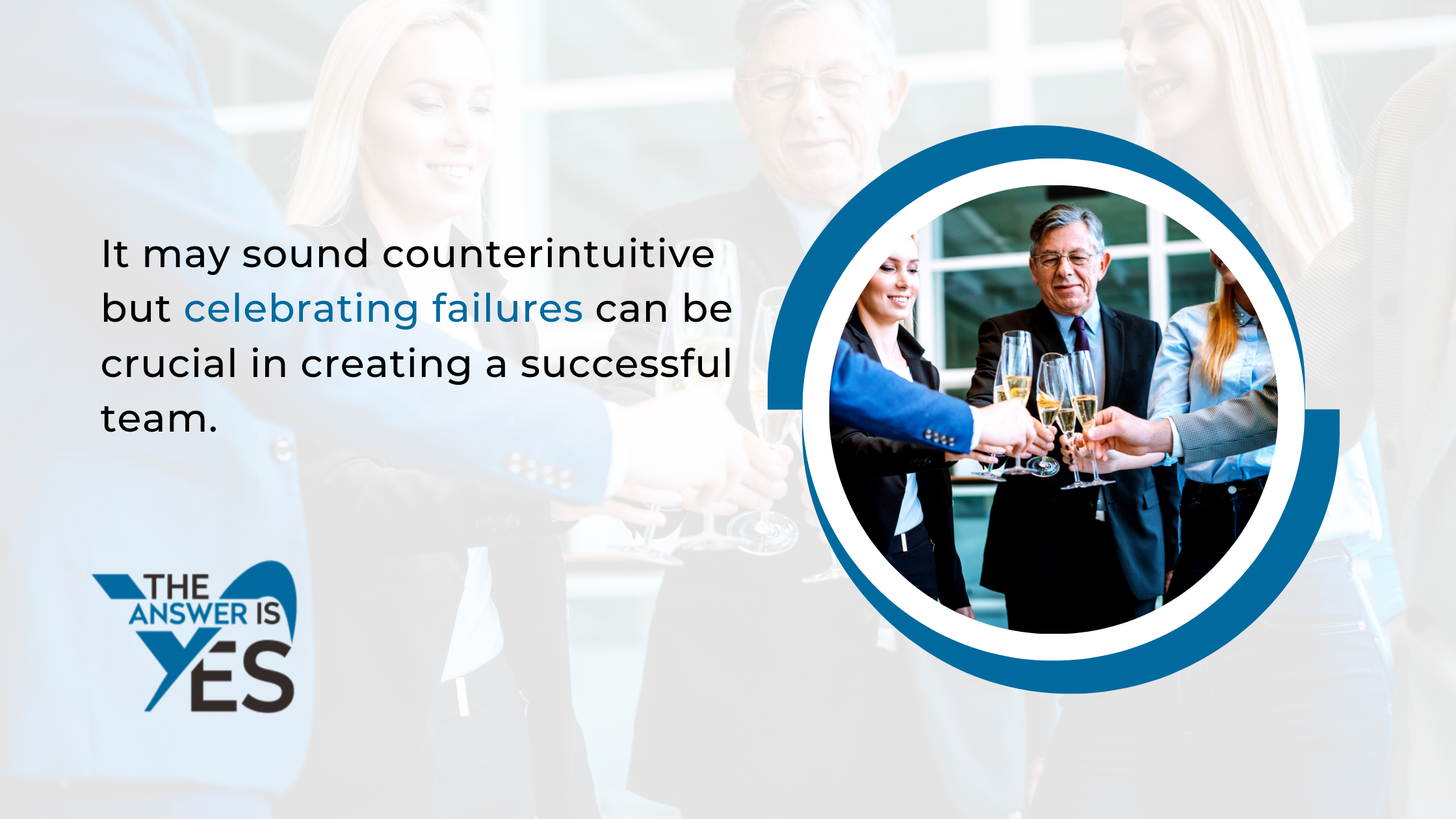
It may sound counterintuitive, but celebrating failure can be crucial in building a successful team.

In many workplaces, failure carries a negative label. People worry about making mistakes because they fear criticism, embarrassment, or consequences. When that fear becomes part of the culture, employees often avoid trying new ideas or experimenting with better ways of working.

👉 Explore Leadership Capability

However, failure often signals something very different. It usually means someone attempted something unfamiliar, tested a new approach, or tried to improve a process. Those efforts are often the foundation of innovation and learning.

Leaders who understand this create environments where mistakes become learning opportunities rather than sources of blame. When teams are encouraged to reflect on what went wrong, they gain insight into how systems, decisions, and behaviours can improve next time.

Clear boundaries still matter. Organisations cannot ignore repeated carelessness or unsafe behaviour. Yet within responsible limits, teams benefit when effort and initiative are recognised even when the outcome is not perfect.

Many successful entrepreneurs and innovators recognise this pattern. Their achievements rarely come from avoiding failure. Instead, progress emerges through experimentation, reflection, and continuous improvement.

Teams that adopt this mindset often become more resilient and more creative. People feel confident suggesting ideas, exploring new approaches, and solving problems together.

Across The Answer Is Yes platform, leadership and team development programs explore how organisations can build learning cultures where growth is encouraged and capability develops over time.

Failure does not define a team.

What the team learns from it does.

👉 Explore Leadership Capability

Category: Leadership Capability

Ten Minutes That Can Change a Team

Ten to fifteen minutes of learning in meetings can strengthen team capability, engagement, and shared knowledge.

Ten Minutes That Can Change a Team

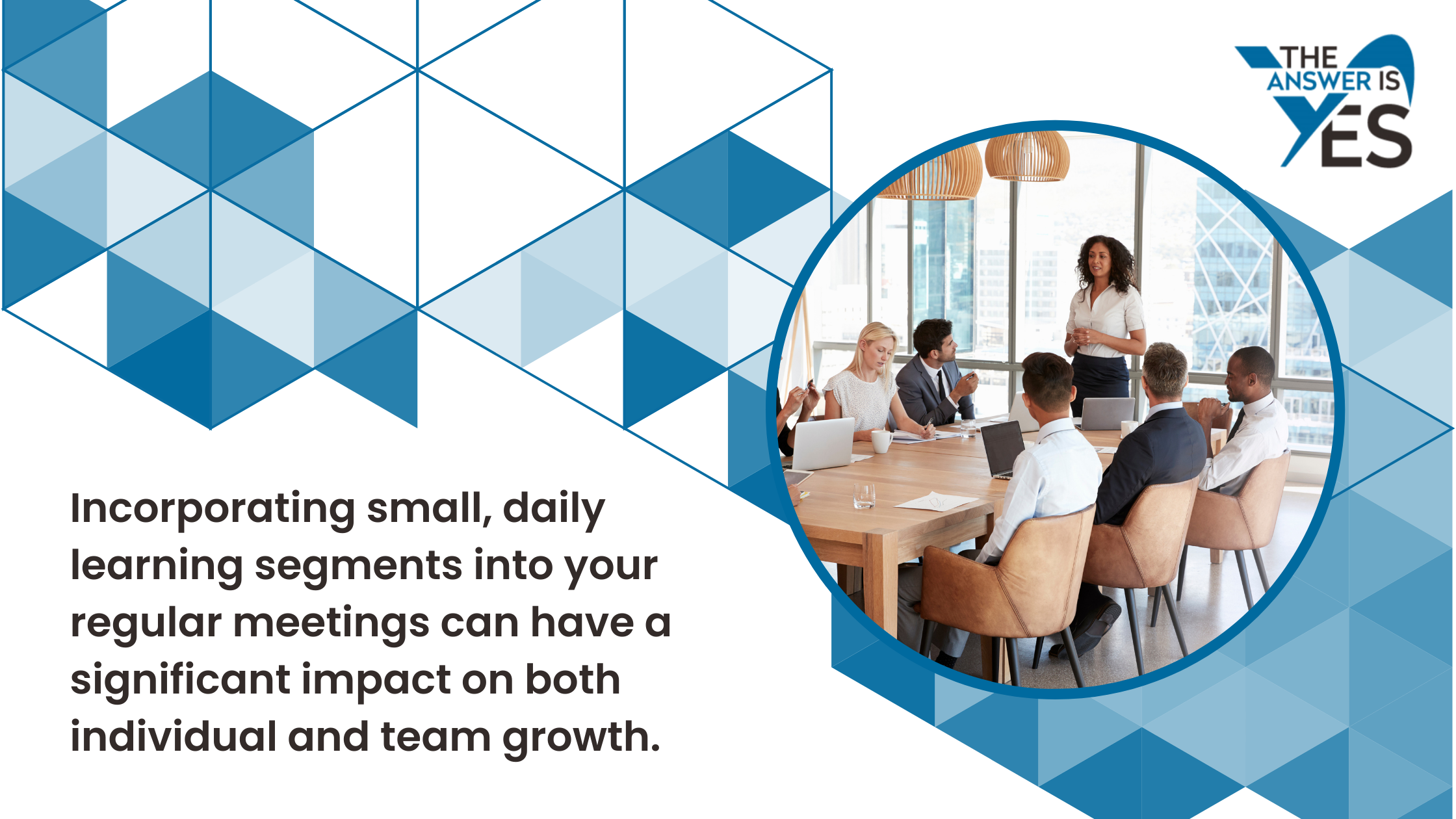
Incorporating small learning segments into regular team meetings can have a significant impact on both individual and team growth.

Many meetings focus almost entirely on updates, deadlines, and operational issues. Those discussions are necessary; however, they rarely strengthen the capability of the team. Over time, teams that only discuss tasks often miss opportunities to develop thinking, knowledge, and collaboration.

👉 Explore Team Leadership and Engagement Capability

Setting aside just ten to fifteen minutes for learning can change that dynamic. A short discussion about a useful concept, an insight from experience, or a practical skill can introduce new perspectives and stimulate better conversations within the team.

Rotating the responsibility among team members also strengthens engagement. When different people lead the learning segment, the team benefits from a wider range of experiences and ideas. Participation increases because individuals feel they are contributing rather than simply listening.

Consistency is more important than duration. A short learning conversation each week gradually builds a culture of curiosity and shared growth. Over time, these discussions strengthen communication, broaden understanding, and encourage continuous improvement.

Leaders who integrate learning into everyday routines often notice stronger team cohesion and greater confidence in problem solving. Instead of treating development as something separate from work, capability becomes part of how the team operates.

Across The Answer Is Yes platform, many courses support these small but powerful learning habits. Programs such as Habits of an Optimist provide practical ideas that can easily be explored during short team discussions.

Ten to fifteen minutes may seem small. However, repeated consistently, those moments can quietly reshape the mindset and capability of an entire team.

👉 Explore Team Leadership and Engagement Capability

Category: Leadership Capability

Why Technical Expertise Does Not Automatically Create Great Leaders

Technical expertise does not automatically create leadership success. Discover why people skills determine real leadership effectiveness.
Explore the Leadership Capability

Why Technical Expertise Does Not Automatically Create Great Leaders

Technical expertise builds credibility. However, leadership requires something more.

Across many industries, the most skilled employee is often promoted into management. At first glance, this approach appears logical. After all, the individual understands the work better than anyone else.

Yet technical expertise does not automatically translate into leadership capability. In reality, the transition from expert to leader demands an entirely different set of skills.

The shift from doing work to leading people

When someone performs technical work, success depends primarily on personal effort. Leaders, however, succeed through the performance of others. This shift changes the nature of responsibility.

A leader must now guide behaviour, resolve conflict, and motivate individuals with different personalities and expectations. Consequently, people management becomes just as important as operational knowledge. Without these skills, even the most talented experts can struggle in leadership roles.

Leadership capability requires different strengths

Effective leadership focuses on developing people rather than demonstrating expertise. Therefore, leaders must strengthen capabilities such as:

— Communication
— Emotional intelligence
— Delegation
— Coaching
— Conflict resolution

These skills allow leaders to build capable teams instead of carrying the workload alone.

Why technical leaders sometimes struggle

Several patterns commonly appear when technical experts move into leadership.

— They solve problems themselves instead of developing their team
— They hesitate to delegate important tasks
— They become frustrated when others work differently
— They avoid difficult conversations

These behaviours usually come from habit rather than poor intent. Nevertheless, they create long-term problems. Teams become overly dependent on the leader, while the leader becomes overwhelmed with responsibility. Eventually, productivity slows and morale begins to decline.

The leadership mindset shift

Successful leaders understand one critical principle. Their value no longer lies in doing the work personally. Instead, their value lies in helping others perform well.

This mindset change allows teams to grow stronger, more confident, and more independent. Over time, the organisation benefits from greater productivity and improved collaboration.

Technical expertise still matters. However, leadership success ultimately depends on the ability to guide people, not simply complete tasks.

Explore the Leadership Capability

Category: Leadership Capability

  • Page 1
  • Page 2
  • Go to Next Page »

Primary Sidebar

Book With Us

Book a Strategy Session Today to discuss your Training Needs

  • This field is for validation purposes and should be left unchanged.

Call Us Now On+61 423 596 393

Training Services

  • Home
  • Contact Us
  • Thinking
  • The Capability Pathways
    • Workforce Gateway
      • Leadership Capability
        • Emerging and Frontline Leaders
        • Communication and Influence
        • Team Leadership and Engagement Programs
        • Conflict and Difficult Conversations
        • Performance Conversations
      • People and Culture Capability
        • Workforce Foundations and HR Systems
        • Recruitment and Talent Management
        • Workplace Culture and Ethics
        • Performance and Reward Systems
      • Safety and Wellbeing Capability
        • WHS Foundations and Legal Duties
        • Psychosocial Risk and Mental Health
        • Emergency Preparedness and Response
        • Physical Risk, Chemicals and Manual Handling
        • Menopause and Life Stage Support
      • Organisational Capability
        • Governance and Structural Foundations
        • Project and Change Capability
        • Operational Systems and Process Excellence
      • Digital and Cyber Capability
        • Cyber Awareness and Human Firewall
        • Cyber Governance and Risk
        • Incident Response and Organisational Readiness
        • Secure Infrastructure and Environments
      • Career and Employability Capability
        • Career Foundations and Direction Capability
        • Job Readiness and Employability Skills Capability
        • Career Growth and Advancement
        • Career Transition and Reinvention
        • Coaching and Career Practice Capability
      • Business and Commercial Capability
        • Business Foundations and Entrepreneurship
        • Marketing, Branding and Visibility
        • Sales, Marketing and Visibility
        • Financial Intelligence and Commercial Performance
        • Strategy, Growth and Scale
      • Government Workforce Capability
    • Human Development Gateway
      • Inner Development Capability
        • Self-Leadership and Personal Mastery
        • Emotional Intelligence and Inner Resilience
        • Purpose, Meaning and Life Direction
        • Reflective Practice and Conscious Decision-Making
      • Educator Development Capability
        • Instructional Design and Digital Delivery
        • Facilitation and Professional Practice
        • Professional Communication and Relational Leadership
      • Student Development Capability
        • Learning Skills and Academic Capability
        • Student Emotional Intelligence and Self-Regulation
      • Family Development Capability
        • Parenting for Learning and Development
        • Family Safety and Digital Protection
        • Healthy Family and Personal Relationships
    • First Nations Capability Gateway
      • Cultural Authority and Governance
      • Learning Through Country
      • Indigenous Ways of Teaching and Learning
      • Identity, Connection and Community
      • First Nations Leadership and Economic Participation
  • Partner With Us
  • Insights
    • The Capability Journal
    • The Answer is Yes Magazine (coming soon)
  • Social Impact
  • About
    • Our Capability Experts
    • Testimonials

What Our Client Says

Corrina was able to handle anything I threw at her

When I was opening my company I was a little lost in what I needed for compliancy and support. Corrina was able to handle anything I threw at her, from Health and Safety requirements, through to Fire training, and staffing issues. What Corrina brings to the table is a wealth of knowledge and access to… Read more “Corrina was able to handle anything I threw at her”

Von Barnes
Principal of Pinnacle Properties

Corrina made it very clear and easy to understand

I work at a desk all day and I didn’t fully understand or realise the multitude of risks/hazards not only in my workplace but in other industries and sites. Corrina made it very clear and easy to understand

Telia Dwyer,
Design Governess

A very good way to spend an afternoon

Doing Hazard & Risk Assessment Training was A very good way to spend an afternoon -it will start me on a journey I have been planing for a year but failed to start

Mark Bell
Desks Etc

Very well explained

The Hazard & Risk Assessment was very well explained, simple… so that every one understands

Maraia Cookson
In House Printing

Recent Posts

  • The Hidden Cost of Owner Dependency
  • Why Staff Problems Are Usually a System Problem
  • Revenue Growth Doesn’t Fix Profit Problems
  • Customer Service Problems Are Rarely About Attitude
  • Workplace Mental Health Is Shaped by How Work Is Designed

Book a Strategy Session Today to discuss your Training Needs

Book now

menu

  • Home
  • Contact Us
  • Thinking
  • The Capability Pathways
    • Workforce Gateway
      • Leadership Capability
        • Emerging and Frontline Leaders
        • Communication and Influence
        • Team Leadership and Engagement Programs
        • Conflict and Difficult Conversations
        • Performance Conversations
      • People and Culture Capability
        • Workforce Foundations and HR Systems
        • Recruitment and Talent Management
        • Workplace Culture and Ethics
        • Performance and Reward Systems
      • Safety and Wellbeing Capability
        • WHS Foundations and Legal Duties
        • Psychosocial Risk and Mental Health
        • Emergency Preparedness and Response
        • Physical Risk, Chemicals and Manual Handling
        • Menopause and Life Stage Support
      • Organisational Capability
        • Governance and Structural Foundations
        • Project and Change Capability
        • Operational Systems and Process Excellence
      • Digital and Cyber Capability
        • Cyber Awareness and Human Firewall
        • Cyber Governance and Risk
        • Incident Response and Organisational Readiness
        • Secure Infrastructure and Environments
      • Career and Employability Capability
        • Career Foundations and Direction Capability
        • Job Readiness and Employability Skills Capability
        • Career Growth and Advancement
        • Career Transition and Reinvention
        • Coaching and Career Practice Capability
      • Business and Commercial Capability
        • Business Foundations and Entrepreneurship
        • Marketing, Branding and Visibility
        • Sales, Marketing and Visibility
        • Financial Intelligence and Commercial Performance
        • Strategy, Growth and Scale
      • Government Workforce Capability
    • Human Development Gateway
      • Inner Development Capability
        • Self-Leadership and Personal Mastery
        • Emotional Intelligence and Inner Resilience
        • Purpose, Meaning and Life Direction
        • Reflective Practice and Conscious Decision-Making
      • Educator Development Capability
        • Instructional Design and Digital Delivery
        • Facilitation and Professional Practice
        • Professional Communication and Relational Leadership
      • Student Development Capability
        • Learning Skills and Academic Capability
        • Student Emotional Intelligence and Self-Regulation
      • Family Development Capability
        • Parenting for Learning and Development
        • Family Safety and Digital Protection
        • Healthy Family and Personal Relationships
    • First Nations Capability Gateway
      • Cultural Authority and Governance
      • Learning Through Country
      • Indigenous Ways of Teaching and Learning
      • Identity, Connection and Community
      • First Nations Leadership and Economic Participation
  • Partner With Us
  • Insights
    • The Capability Journal
    • The Answer is Yes Magazine (coming soon)
  • Social Impact
  • About
    • Our Capability Experts
    • Testimonials

Contact Information

Queensland, Australia

info@answeryes.com.au

07 3180 4422

Policies

  • Accessibility Statement

  • Australian Privacy Policy

  • Refund and Returns Policy

  • Website and Service Terms

Connect With us

facebook twitter instagram tiktok
  • Home
  • Contact Us
  • Thinking
  • The Capability Pathways
    • Workforce Gateway
      • Leadership Capability
        • Emerging and Frontline Leaders
        • Communication and Influence
        • Team Leadership and Engagement Programs
        • Conflict and Difficult Conversations
        • Performance Conversations
      • People and Culture Capability
        • Workforce Foundations and HR Systems
        • Recruitment and Talent Management
        • Workplace Culture and Ethics
        • Performance and Reward Systems
      • Safety and Wellbeing Capability
        • WHS Foundations and Legal Duties
        • Psychosocial Risk and Mental Health
        • Emergency Preparedness and Response
        • Physical Risk, Chemicals and Manual Handling
        • Menopause and Life Stage Support
      • Organisational Capability
        • Governance and Structural Foundations
        • Project and Change Capability
        • Operational Systems and Process Excellence
      • Digital and Cyber Capability
        • Cyber Awareness and Human Firewall
        • Cyber Governance and Risk
        • Incident Response and Organisational Readiness
        • Secure Infrastructure and Environments
      • Career and Employability Capability
        • Career Foundations and Direction Capability
        • Job Readiness and Employability Skills Capability
        • Career Growth and Advancement
        • Career Transition and Reinvention
        • Coaching and Career Practice Capability
      • Business and Commercial Capability
        • Business Foundations and Entrepreneurship
        • Marketing, Branding and Visibility
        • Sales, Marketing and Visibility
        • Financial Intelligence and Commercial Performance
        • Strategy, Growth and Scale
      • Government Workforce Capability
    • Human Development Gateway
      • Inner Development Capability
        • Self-Leadership and Personal Mastery
        • Emotional Intelligence and Inner Resilience
        • Purpose, Meaning and Life Direction
        • Reflective Practice and Conscious Decision-Making
      • Educator Development Capability
        • Instructional Design and Digital Delivery
        • Facilitation and Professional Practice
        • Professional Communication and Relational Leadership
      • Student Development Capability
        • Learning Skills and Academic Capability
        • Student Emotional Intelligence and Self-Regulation
      • Family Development Capability
        • Parenting for Learning and Development
        • Family Safety and Digital Protection
        • Healthy Family and Personal Relationships
    • First Nations Capability Gateway
      • Cultural Authority and Governance
      • Learning Through Country
      • Indigenous Ways of Teaching and Learning
      • Identity, Connection and Community
      • First Nations Leadership and Economic Participation
  • Partner With Us
  • Insights
    • The Capability Journal
    • The Answer is Yes Magazine (coming soon)
  • Social Impact
  • About
    • Our Capability Experts
    • Testimonials

© 2020 - 2026 The Answer Is Yes.

×

HAZARDOUS CHEMICALS
SELF-ASSESSMENT CHECKLIST

5_0_5_0_5_0_5_0_5_0_5_0_5_0_5_0_5_0_5_0_5_0_5_0_5_0_5_0_5_0_5_0_5_0_5_0_5_0_5_0_5_0

Total

0/100

0 - 25 - You have serious problem on your site and need to act immediately to rectify the situation or you could find your business heavily fined.

30 - 50 - You need to actively implement your WHS system.

55 - 75 - Something in place but there are areas that need to be addressed.

75 - 95 - Your chemical health and safety system in place.

100 - Well Done!

Book a Meeting with one of our WHS Consultant to discuss how we can help you achieve 100% compliance. 
Book a Virtual Meeting