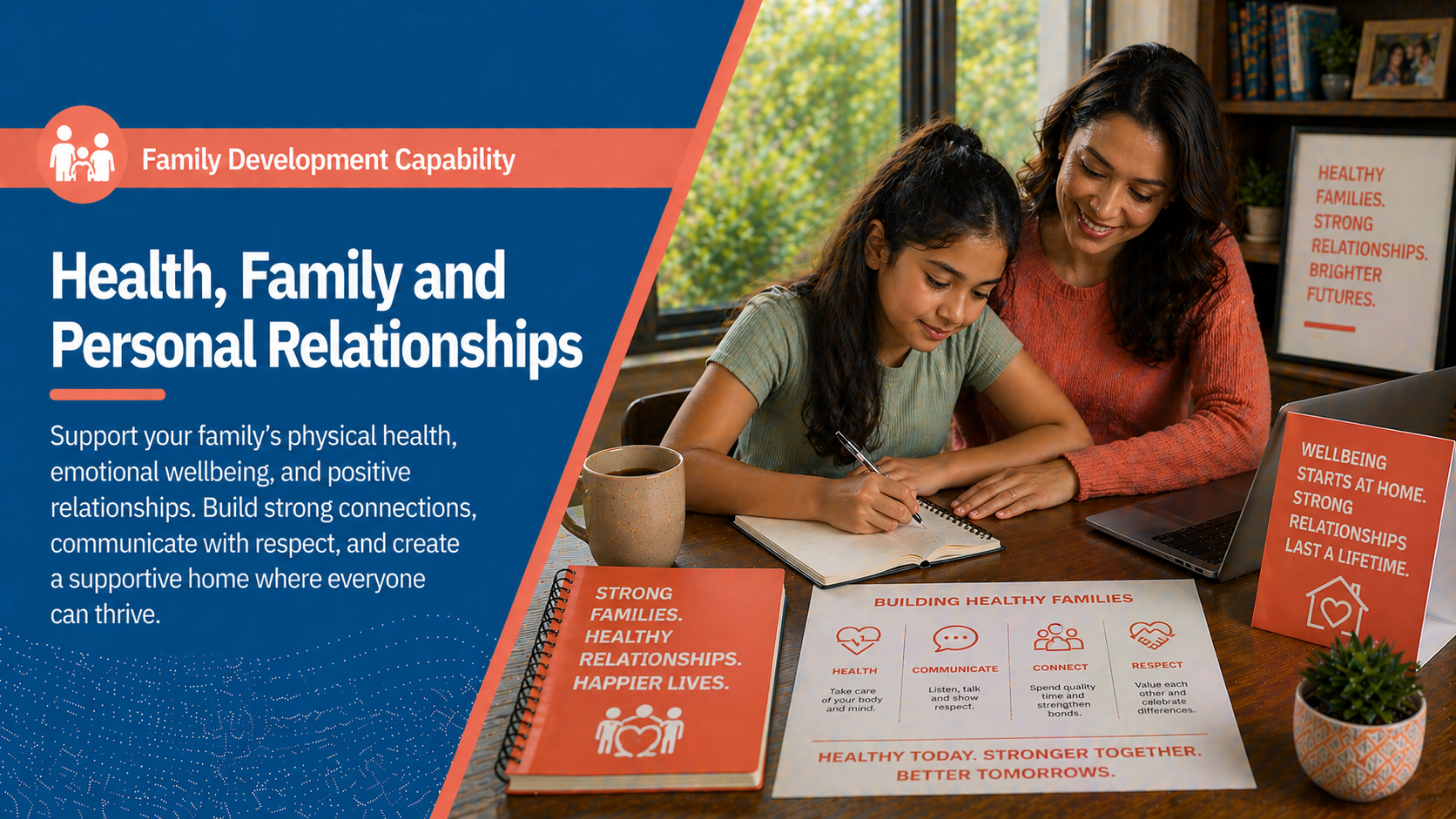
Health, Family and Personal Relationships
Building Stronger Relationships at Home and in Life
Health, family and personal relationships form the foundation of emotional wellbeing, stability and personal growth. The quality of our relationships influences how we experience connection, manage conflict and navigate life’s challenges. When relationships are supportive and respectful, individuals feel safer, more confident and better able to thrive.
However, strong relationships rarely happen by accident. They require communication skills, emotional awareness and the ability to establish healthy boundaries. Without these capabilities, misunderstandings can grow, conflict can escalate and individuals may struggle to express their needs clearly.
This program stream focuses on developing the relational skills that support healthier family dynamics and stronger personal connections.
Strengthening Communication, Boundaries and Trust
Healthy relationships depend on clear communication and emotional understanding. When people feel heard and respected, trust grows and relationships become more resilient during difficult times.
Courses within this stream explore how individuals can strengthen communication, recognise unhealthy patterns and establish boundaries that protect emotional wellbeing. Participants learn how to express needs clearly, listen more effectively and respond thoughtfully during challenging conversations.
By developing these skills, individuals gain the confidence to build relationships that support connection, cooperation and long-term wellbeing.
Courses in Program Stream 3 — Health, Family and Personal Relationships
Mastering the Art of Healthy Relationships
Learn the key principles that support respectful, balanced and supportive relationships in both personal and family life.
Cultivating Self Love for Healthy Relationships
Understand how self-respect and emotional awareness form the foundation for strong and healthy relationships with others.

Smart Meaningful Personal Relationships
Discover how to build relationships that are authentic, supportive and aligned with your personal values.

How to Manage Conflict in Your Family
Learn practical strategies for resolving family conflict while maintaining respect and emotional connection.

How to Establish Personal Boundaries
Understand how healthy boundaries protect wellbeing and strengthen respectful relationships.

Learn to Recognise Domestic Violence Early
Develop awareness of the early warning signs of domestic violence and learn how to respond safely and supportively.