
Description
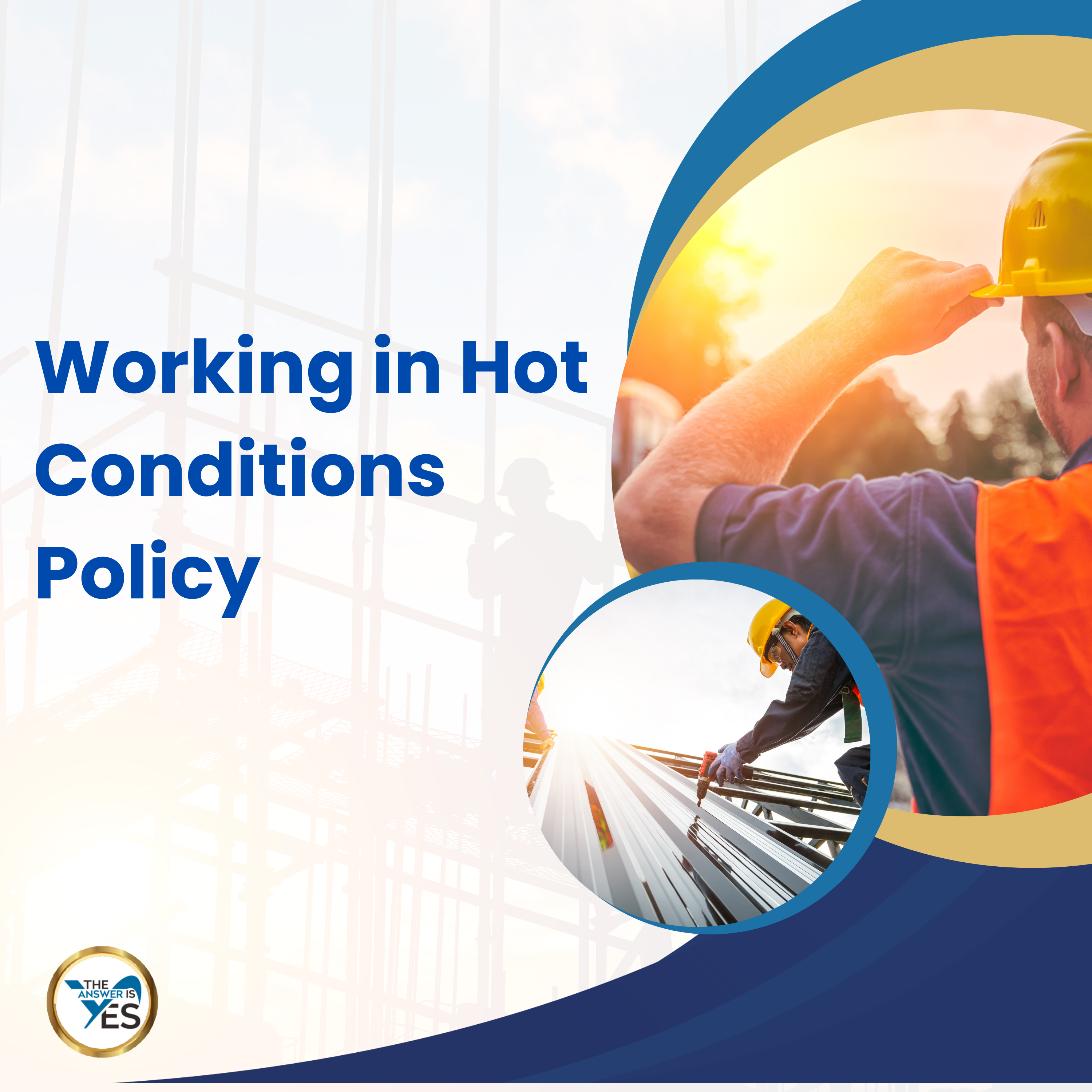
Working in Hot Conditions Policy
The Working in Hot Conditions Policy establishes clear procedures and guidelines to manage risks associated with working in hot environments. This policy protects employees from heat-related illnesses and injuries while ensuring compliance with relevant Work Health and Safety (WHS) legislation.
Because safety matters, even in the heat.
Why Your Organisation Needs This Policy
Because Heat Poses Serious Risks
Working in hot environments can lead to heat exhaustion, heatstroke, and decreased productivity. This policy addresses these risks to protect employees.
Because Prevention Saves Lives
Proactive measures and clear guidelines reduce the likelihood of heat-related illnesses, ensuring employees can work safely.
Because Compliance is Essential
Adhering to WHS legislation ensures your organisation meets its legal responsibilities and maintains a safe workplace.
What the Policy Covers
1. Risk Assessment and Management
- Identify Heat Risks: Evaluate tasks, locations, and conditions where employees are exposed to heat stress.
- Assess Severity: Analyse factors such as temperature, humidity, and physical workload to determine risk levels.
- Review and Adapt: Regularly reassess heat risks and update measures to reflect changes in conditions or work processes.
2. Personal Protective Equipment (PPE)
- Appropriate Attire: Provide lightweight, breathable clothing designed for hot conditions.
- Sun Protection: Supply items such as wide-brimmed hats, sunglasses, and sunscreen to protect against UV exposure.
- Hydration Tools: Ensure access to water bottles or hydration packs for employees working in high temperatures.
3. Safe Work Practices
- Hydration Breaks: Schedule regular breaks for employees to hydrate and cool down in shaded or air-conditioned areas.
- Modify Work Schedules: Adjust work hours to avoid the hottest parts of the day, especially for outdoor tasks.
- Task Rotation: Rotate employees to reduce prolonged exposure to high temperatures and heavy physical activity.
4. Health Monitoring and Support
- Monitor Symptoms: Train supervisors to identify signs of heat stress, such as excessive sweating, dizziness, or confusion.
- Pre-Work Assessments: Conduct health checks for employees to ensure they are fit for work in hot conditions.
- Emergency Readiness: Equip work areas with first aid supplies and train employees to respond to heat-related emergencies.
5. Training and Awareness
- Heat Risk Education: Educate employees on the risks of working in hot conditions and the importance of hydration and rest.
- PPE Training: Demonstrate the correct use and care of protective gear designed for hot environments.
- Emergency Procedures: Train employees to recognise and respond to heat-related illnesses effectively.
6. Compliance and Monitoring
- Regulatory Adherence: Ensure all practices comply with WHS legislation and industry standards for working in hot environments.
- Periodic Audits: Conduct regular reviews of work practices, PPE, and employee adherence to safety guidelines.
- Incident Reporting: Require immediate reporting and investigation of heat-related incidents to improve preventive measures.
Benefits of This Policy
Enhanced Safety and Health
Proactive measures protect employees from heat-related illnesses and injuries, ensuring their well-being.
Improved Productivity
Employees working in safe, supportive conditions are more focused and efficient, even in challenging environments.
Regulatory Compliance
Adhering to WHS legislation avoids legal penalties and demonstrates a commitment to safety.
Increased Employee Confidence
Clear procedures and access to protective measures foster trust and show employees that their safety is a priority.
Why Choose This Working in Hot Conditions Policy?
- Comprehensive and Practical: Addresses all aspects of managing risks associated with hot conditions.
- Proactive Approach: Focuses on prevention, reducing the likelihood of heat-related illnesses and injuries.
- Aligned with WHS Standards: Ensures compliance with Australian workplace safety legislation.
Take Action to Protect Employees in Hot Conditions
Implement the Working in Hot Conditions Policy to safeguard employees, reduce risks, and ensure compliance with safety regulations.
By enforcing this policy, you’ll create a safer, more productive workplace where employees can thrive, no matter the temperature. Because protecting your team is essential in every environment.





Reviews
There are no reviews yet.