
Description
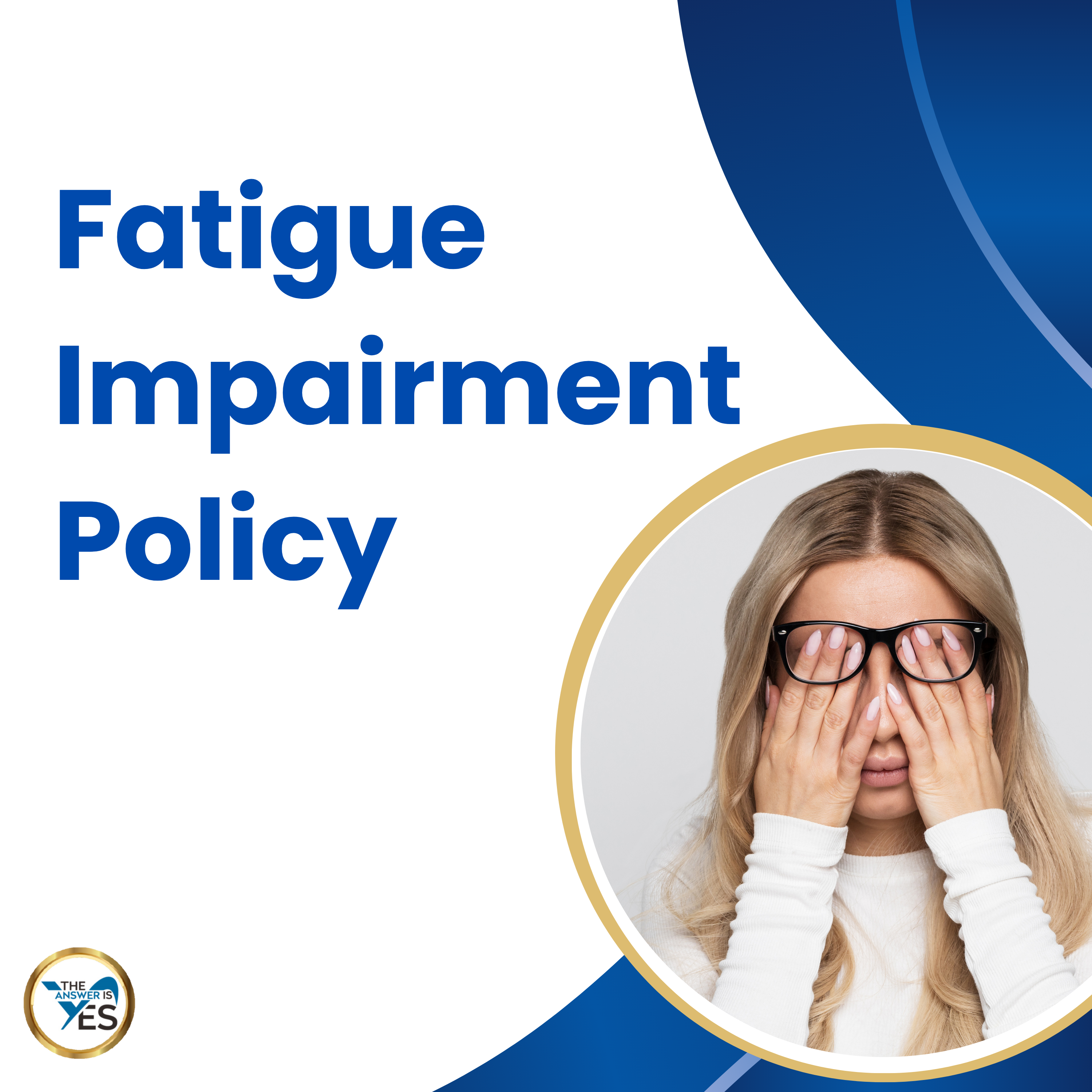
Fatigue Impairment Policy
The Fatigue Impairment Policy ensures a safe and healthy work environment by addressing the risks associated with fatigue. Fatigue can impair judgment, concentration, and reaction times, increasing the likelihood of workplace accidents, reduced productivity, and health issues. This policy reflects the organisation’s commitment to preventing fatigue-related impairment and fostering a culture where well-being is prioritised.
Because safety and well-being start with managing fatigue.
Why Your Organisation Needs a Fatigue Impairment Policy
Enhance Workplace Safety
Fatigue-related risks, including accidents and errors, are significantly reduced when clear guidelines and proactive measures are in place.
Improve Employee Well-Being
By addressing fatigue, your organisation helps employees maintain better physical and mental health, contributing to a healthier workplace culture.
Boost Productivity
Fatigue management ensures employees are alert and focused, improving overall efficiency and performance.
Promote Shared Responsibility
This policy highlights the shared accountability of employers and employees in managing fatigue, fostering collaboration and trust.
What This Policy Covers
1. Identifying Fatigue Risks
- Recognises workplace factors contributing to fatigue, such as long hours, shift work, and high workloads.
- Encourages employees to report fatigue-related concerns.
2. Fatigue Management Strategies
- Implements scheduling practices that allow for adequate rest between shifts.
- Encourages regular breaks during work hours to prevent overexertion.
- Provides resources for employees to recognise and manage their own fatigue.
3. Employer Responsibilities
- Ensures work schedules comply with legal standards and prioritise employee health.
- Conducts regular risk assessments to identify fatigue-related hazards.
- Offers training programs on recognising and managing fatigue.
4. Employee Responsibilities
- Encourages employees to prioritise rest and self-care outside of work.
- Promotes open communication about fatigue-related concerns with supervisors.
- Requires adherence to company policies on breaks and rest periods.
5. Incident Response
- Outlines procedures for addressing fatigue-related incidents, including immediate action plans and long-term solutions.
- Establishes protocols for investigating fatigue as a contributing factor in workplace accidents.
6. Continuous Improvement
- Includes regular reviews of fatigue management practices to ensure effectiveness and adapt to evolving workplace needs.
Benefits of This Policy
Reduced Accidents and Errors
Proactively managing fatigue lowers the risk of workplace incidents, ensuring a safer environment for everyone.
Enhanced Employee Health
Employees benefit from improved mental and physical well-being when fatigue-related risks are addressed.
Increased Productivity
Alert and focused employees perform more effectively, contributing to better organisational outcomes.
Stronger Workplace Culture
Shared responsibility for fatigue management fosters trust, collaboration, and mutual respect between employers and employees.
Why Choose This Fatigue Impairment Policy?
- Comprehensive and Actionable: Covers every aspect of fatigue management, from prevention to response.
- Aligned with Legal Standards: Ensures compliance with Australian workplace health and safety regulations.
- Practical and Employee-Centred: Balances operational needs with employee well-being.
Take Action Against Fatigue Today
Equip your organisation with the Fatigue Impairment Policy to protect employees, enhance safety, and improve workplace performance.
With this policy in place, you’ll foster a healthier, safer, and more productive work environment. Because managing fatigue is essential for success and well-being.
If you have a question, contact us today.



Reviews
There are no reviews yet.