
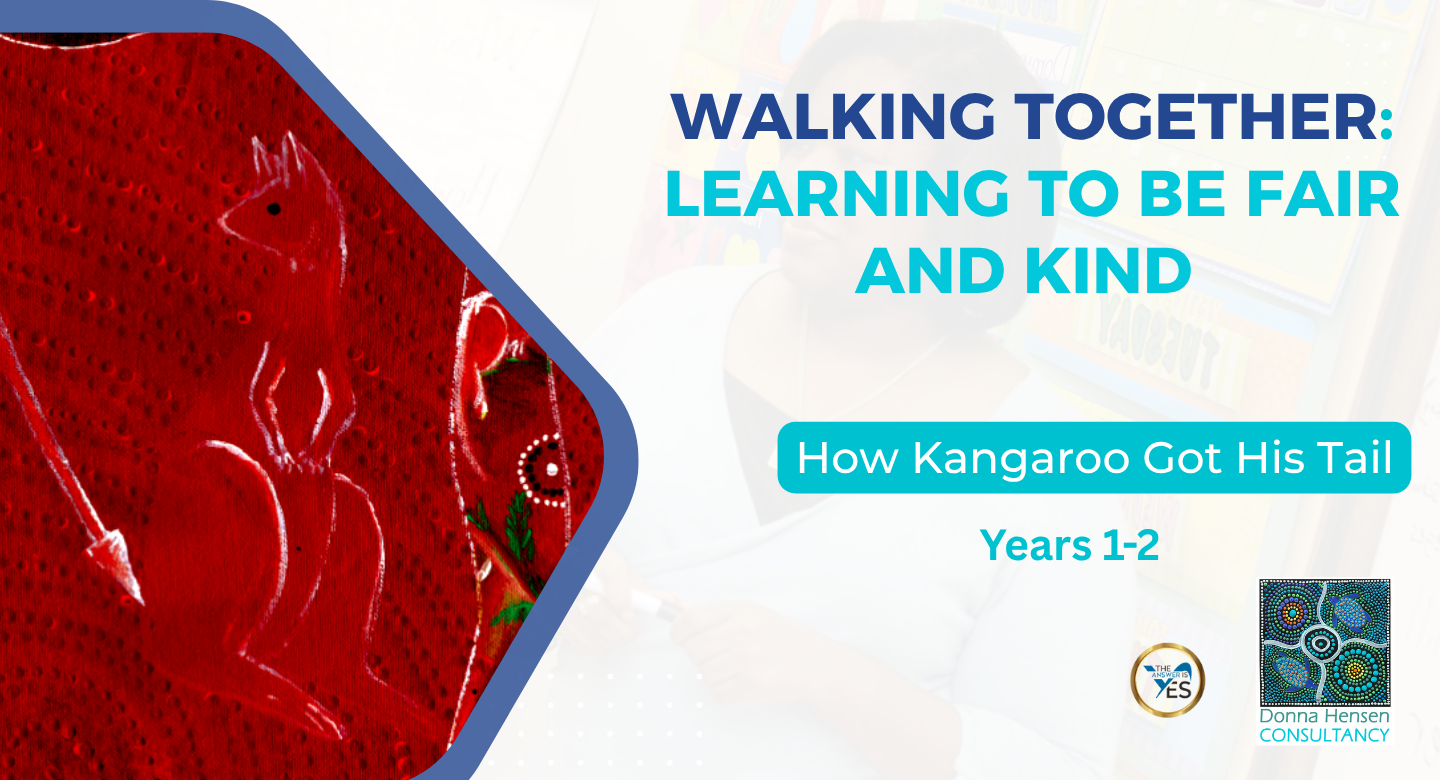
Cultural Learning Through Story
Aboriginal stories often carry important lessons about relationships, behaviour and community responsibility. When children listen to these stories, they learn not only about the characters but also about the values that help communities live well together.
In this course, the story of Kangaroo provides a starting point for exploring fairness, sharing and respectful problem solving. Through reflection and classroom discussion, students begin recognising how fairness and kindness influence the way people treat each other.
Storytelling is supported by art, role play and cooperative activities that allow children to explore these ideas through participation rather than instruction alone.
Classroom Lessons
The lessons provide structured activities that help children explore fairness, emotions and cooperation.
Lessons include:
— Life Lesson: How Kangaroo Got His Tale
— Storytelling Through Aboriginal Art
— What Makes Something Fair?
— Conflict Choices Role Play
— Kindness Boomerang
— Mob Helper Missions
— Respectful Listening and Problem Solving
— Building a Gunyah Together
— Feed the Mob Game
Through storytelling, discussion and cooperative activities, students practise listening, sharing and working together to solve problems.
Investment
This course provides educator professional learning alongside structured classroom lessons that teachers can guide with their students. Course Investment
— Individual Course Access — $347 + GST
Includes educator learning modules and nine classroom lessons designed for Years 1–2 learning environments.
Walking Together: Learning to Be Fair and Kind (Years 1–2)
Walking Together: Learning to Be Fair and Kind introduces young students to fairness, kindness and respectful relationships through Aboriginal storytelling and cultural learning. Using the story How Kangaroo Got His Tale, the course helps children explore what it means to share, cooperate and solve problems together.
Stories have long been an important way Aboriginal cultures teach life lessons to younger generations. Through storytelling, discussion and shared activities, children begin recognising how their actions affect others and how they can respond with fairness and respect.
This course invites students to reflect on the behaviour of story characters, practise cooperation through games and explore the idea that strong communities are built through kindness and mutual support.
Professional Learning for Educators
The course includes educator learning modules that provide cultural context and practical guidance for introducing Indigenous emotional learning in the classroom.
Educators explore topics such as:
— Storytelling as a Cultural Teaching Tool
— Understanding Indigenous Emotional Intelligence
— Aboriginal Approaches to Behaviour Guidance
— Cultural Meanings of Community and “Mob”
— Aboriginal Perspectives on Time, Patience and Process
— The Meaning of Shelter and Community through the Gunyah
— Emotional Regulation through Movement, Nature and Rhythm
These modules help teachers understand how cultural knowledge supports emotional learning and respectful relationships among students.
Developing Fairness and Kindness
Understanding fairness and kindness helps children build positive relationships with others. Through guided activities and storytelling, students learn that cooperation, listening and empathy help communities grow strong.
These lessons encourage students to recognise their feelings, consider the perspectives of others and find respectful ways to solve problems together.
Begin the Learning Journey
Help students explore fairness, kindness and respectful relationships through Aboriginal storytelling and culturally grounded learning experiences.