Learning Through Movement and Language
Aboriginal teaching approaches often encourage children to learn by watching, listening and doing. Rather than separating learning into subjects, knowledge grows through experience and participation.
In this lesson, children hear Yuwi words for different parts of the body. They repeat the words, move their bodies and participate in playful activities that reinforce learning. Consequently, children remember the words through rhythm, movement and repetition.
What Educators and Learners Will Experience
This course combines Yuwi language learning with playful classroom activities that support early childhood development. Children listen to Yuwi body part words, repeat the sounds and use movement, music and games to reinforce learning. Through repetition and participation, children begin building confidence speaking Aboriginal language. The course includes:
— 2 Student Lessons
— Multiple Classroom Learning Activities within each lesson
— Flashcard Language Activities
— Interactive Movement Games
— Music and Song Based Learning
— Cultural Context for Educators
— Printable Lesson Briefs and Language Resources
Activities include listening and repetition video exercises, flashcard recognition games, movement based learning, and a Yuwi language Hokey Pokey song that helps children remember body part words through rhythm and participation. These learning experiences help children engage with Aboriginal language while building confidence, memory and curiosity.
Begin the Learning Journey
Introduce children to Aboriginal language through movement, song and playful learning.
Learning Body Parts in Yuwi
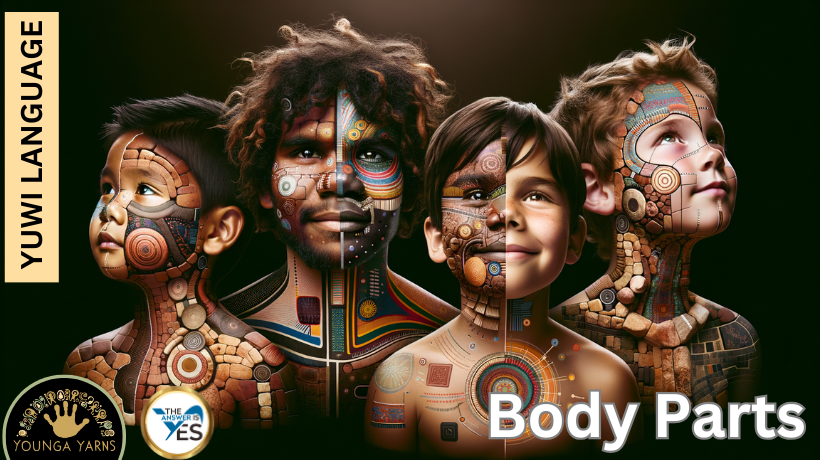
Learning Body Parts in Yuwi introduces children to Aboriginal language through movement, rhythm and playful learning. Across Aboriginal cultures, children often learn through observation, repetition, song and shared activity.
This lesson helps educators introduce Yuwi language words connected to the human body. At the same time, children explore how learning can happen through movement, listening and participation.
Through language and play, children begin recognising that words carry connection to people, culture and Country.
Cultural Context for Educators
Educators also receive cultural context that explains Aboriginal perspectives on the body and its relationship with Country. These insights help teachers introduce language learning in ways that are respectful and culturally informed.
Understanding these perspectives strengthens cultural awareness and helps educators create safe and respectful learning environments.
Why Language Learning Matters
When children hear and repeat Aboriginal language, they begin recognising that language belongs to Country and culture. These early experiences help build curiosity and respect for First Nations knowledge. Language learning also strengthens listening, memory and confidence while encouraging joyful participation.
Investment
This course is offered as an individual cultural lesson designed for educators who want meaningful cultural learning experiences in early childhood environments.
Course Overview
— Lesson 1 — Listening and Repeating Yuwi Body Words
— Lesson 2 — Sing and Move: Yuwi Hokey Pokey
— Flashcard Language Activities
— Interactive Movement Games
— Reflection and Discussion Activities
— Individual Lesson Access — $150 + GST
Access includes educator guidance, language resources and classroom activities designed for early learning environments.